Open any switchboard in a Pakistani home and you will usually see red, black and green wires. In a three-phase meter room you will also see yellow and blue. These colours are not decoration. They tell the next electrician which wire is live, which is neutral and which is the safety earth, and they prevent dangerous mistakes during repairs.
This guide explains what each wire colour means in house wiring in Pakistan, how colours are used in three-phase supplies, and how to plan colours before you buy wire.
| Colour | Common use in Pakistan |
|---|---|
| Red | Phase (live) in single phase wiring; first phase (L1) in three-phase |
| Black | Neutral |
| Green (or green and yellow) | Earth |
| Yellow | Second phase (L2) in three-phase |
| Blue | Third phase (L3) in three-phase; switched lines in some installations |
| White / Pink | Switched lines, two-way switching, or extra circuits as the electrician marks |
This is the traditional practice followed widely in Pakistan. Some new projects follow the newer international colours (brown, black and grey for phases, blue for neutral, green and yellow for earth). Whatever system is chosen, the most important rule is to use it consistently throughout the building.
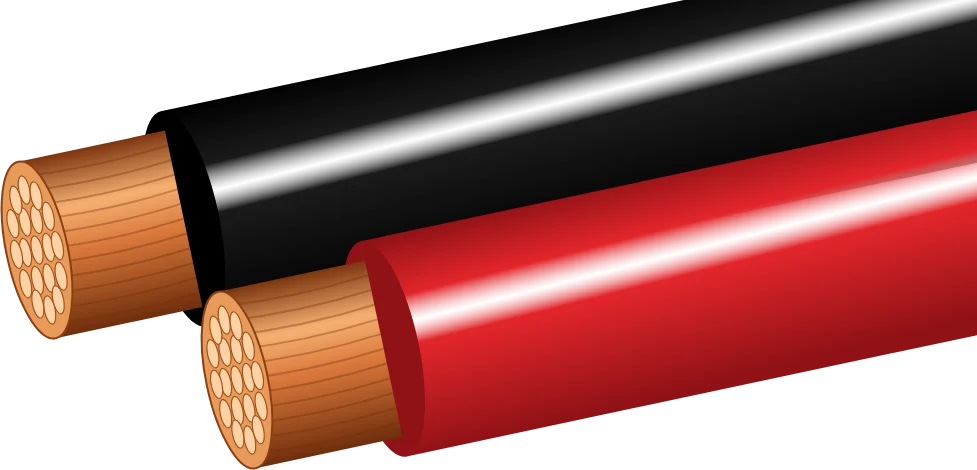
Red carries the live supply from the DB to switches, sockets and appliances. It is the wire that can give a shock. Switches should always break the red (phase) wire, so that a light holder or appliance is dead when switched off.
Black is the return path for current back to the DB and the supply. In normal use the neutral carries the same current as the phase, so it must be the same size as the red wire on that circuit.
Green, or green with a yellow stripe, is the protective earth. It connects metal bodies of appliances, the earth pins of sockets and metal fittings to the earth bar and the earth pit. It should never be used as a live or neutral conductor. See our guide on solid vs stranded earthing wire.
In a three-phase supply, red, yellow and blue mark the three phases. This makes it easy to balance loads and to identify each phase at the meter, the main DB and sub-boards.
Extra colours are useful for switched lines (the wire from a switch to a light), two-way staircase switching, or for separating circuits in the same conduit. They make fault-finding faster for whoever works on the wiring later.
| Conductor | Colour |
|---|---|
| Phase 1 (L1) | Red |
| Phase 2 (L2) | Yellow |
| Phase 3 (L3) | Blue |
| Neutral | Black |
| Earth | Green (or green and yellow) |
Three-phase main lines are usually run in heavy sizes such as 7/52 or 7/64. Buying each phase in its own colour avoids confusion at the meter. Read more in our 7/64 wire and three-phase guide.
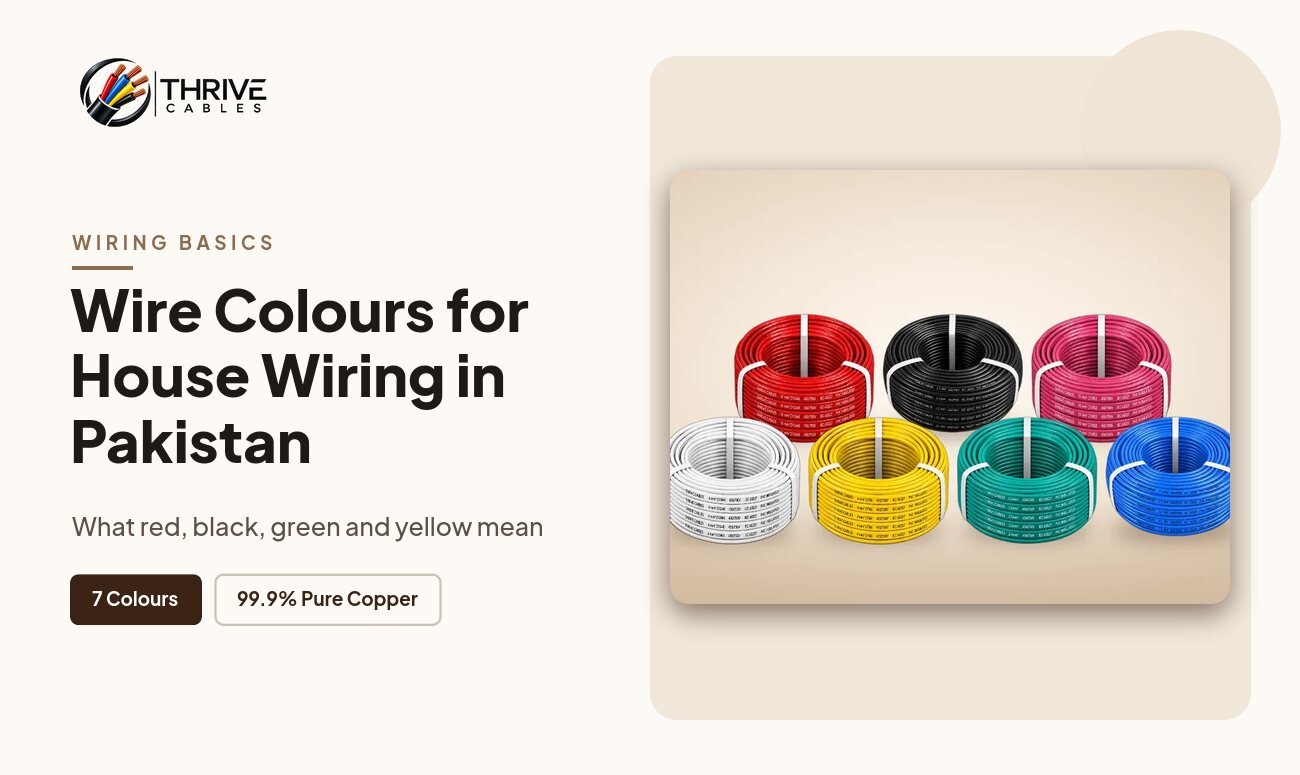
Thrive Cables single core copper wire is available in 7 colours: Red, Black, Blue, Green, White, Yellow and Pink, across the full range from 1 mm² and 3/29 to 7/29, 7/36, 7/44, 7/52 and 7/64. Every coil is 99.9% pure copper with fire-retardant PVC insulation, made in Lahore. Choose the size and colour on each product page, or order at factory price on WhatsApp at +92 324 6570645.
Which colour is the live wire in Pakistan?
Red is the usual colour for the live (phase) wire in single phase house wiring.
Which colour is neutral?
Black is the usual colour for neutral.
Which colour is earth?
Green, or green with a yellow stripe, is used for earth.
What colours are used for three-phase?
Red, yellow and blue for the three phases, black for neutral and green for earth.
Does wire colour affect quality or capacity?
No. Colour only identifies the wire’s role. Capacity depends on the copper size and quality.
Wire colours are a simple safety language: red for phase, black for neutral, green for earth, and yellow and blue for the other phases in three-phase supplies. Plan colours before buying, use them consistently across the building, and make sure switches always break the phase wire. A neat, colour-coded installation is safer today and much easier to repair tomorrow.
Tell us the size and quantity. We reply on WhatsApp the same day.