Walk onto any building site in Pakistan and you will see two kinds of wire: flexible stranded wire for live circuits, and a stiffer single-strand wire running alongside as the earth. That stiff wire is solid copper earthing wire, and the most common size is 1/.044. Many homeowners wonder why the earth is solid when every other wire is stranded, and whether it matters.
This guide explains the difference between solid and stranded wire, why solid copper is widely used for earthing, and where each type belongs in a safe installation.
An earth wire does not carry current in normal use. Its job is to give fault current a safe, low-resistance path to the ground. If a live wire touches the metal body of a washing machine, a geyser or a fan, the earth wire carries that fault current away and trips the breaker or RCD, instead of letting it pass through a person.
Because it only works during a fault, the earth wire must stay healthy and connected for decades, even though nobody notices it. For a full explanation of why every house needs earthing, see our guide on earthing wire in Pakistan.
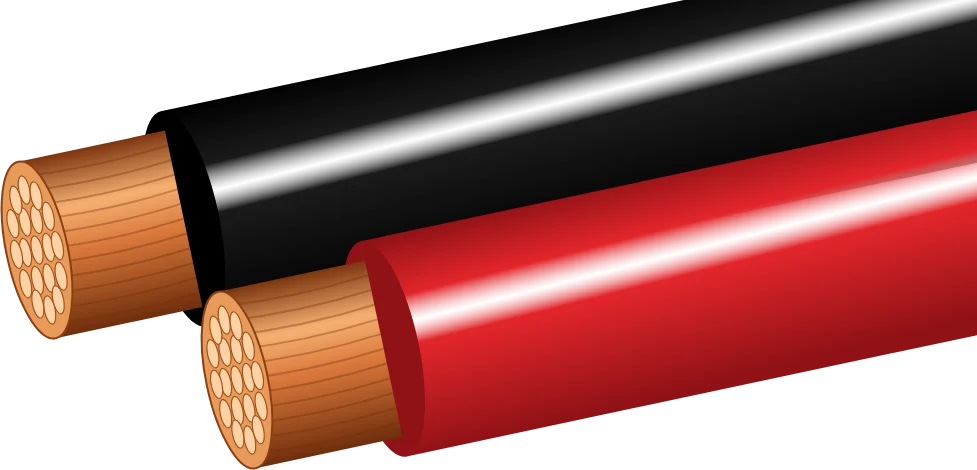
| Property | Solid wire (e.g. 1/.044) | Stranded wire (e.g. 7/29) |
|---|---|---|
| Conductor | One single copper strand | Several thin copper strands twisted together |
| Flexibility | Stiff, holds its shape | Flexible, easy to bend |
| Terminal grip | Firm, one solid surface under the screw | Needs care so no strand slips out |
| Surface area exposed to air | Less, so slower corrosion | More, between the strands |
| Repeated bending | Can crack if bent back and forth many times | Handles movement well |
| Typical use | Earth continuity, fixed runs | Live circuits, main lines |
Earth wires end at screw terminals: the earth bar in the DB, the earth pin of sockets and the earth screw of fittings. A single solid conductor sits firmly under a screw. There are no loose strands that can escape the terminal and weaken the connection.
A solid conductor has less surface exposed to air and moisture than many thin strands. In damp walls, bathrooms and outdoor runs, this helps the earth path stay healthy for longer.
Earth wires run in fixed paths inside conduits and are not moved once installed. The flexibility of stranded wire is not needed, so the stiffer solid wire is a practical choice.
On many sites, the solid earth wire is immediately recognisable by its stiffness, especially when it is in green insulation. This reduces mistakes during connection.
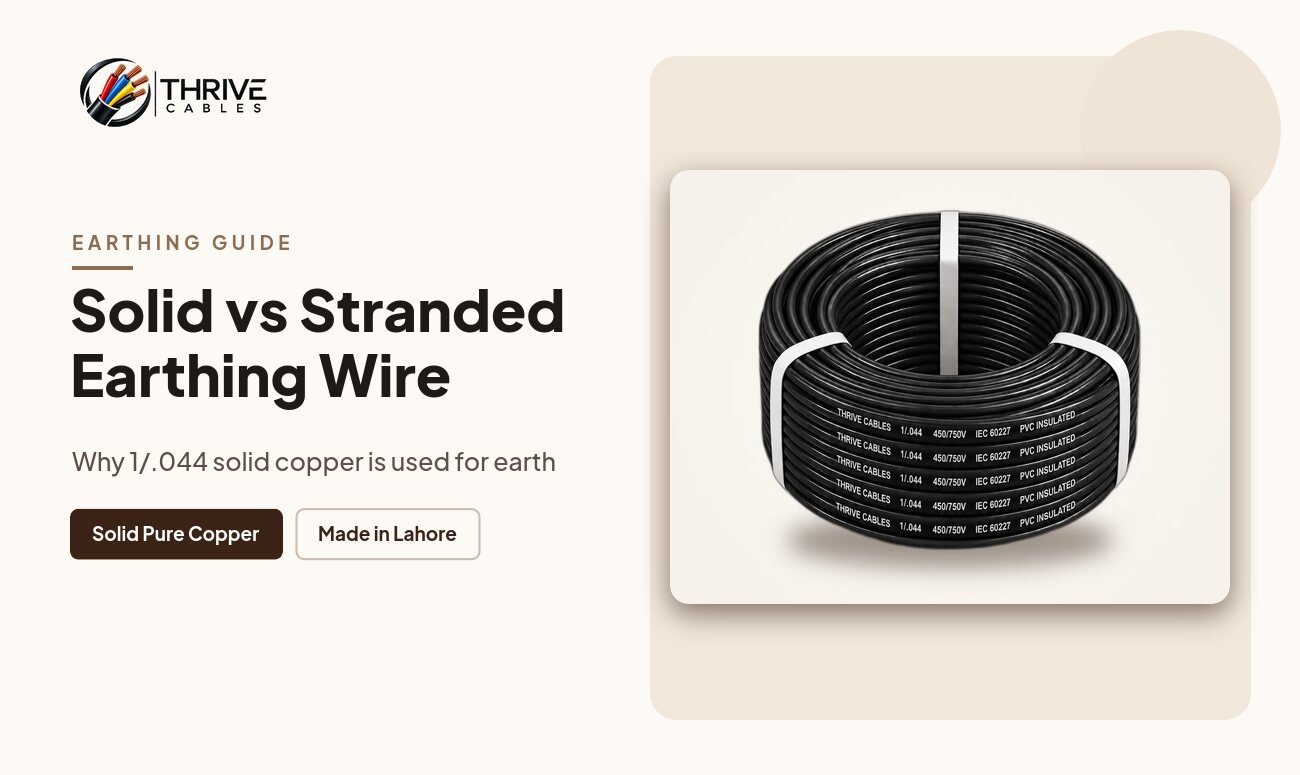
1/.044 solid earthing wire has a single copper conductor of 0.044 inch (about 1 mm²). It is commonly used as the earth continuity conductor that runs with lighting and light-duty circuits to switchboards, light fittings and fans. For socket circuits, heavy appliance lines and the main earth lead, your electrician may specify a larger earth conductor matched to the size of the live wires.
Thrive Cables manufactures 1/.044 single core solid earthing wire in Lahore from 99.9% pure solid electrolytic copper with fire-retardant PVC insulation, supplied in full-length 90 m coils. Green is the usual earth colour, and 6 other colours are available. Order at factory price on WhatsApp at +92 324 6570645.
Why is earthing wire solid and not stranded?
A solid conductor grips firmly under screw terminals, resists corrosion and does not need to flex, which suits an earth wire that sits unused until a fault happens.
Can I use stranded wire for earthing?
Yes. Stranded copper of the correct size is also a valid earth conductor, especially for larger earth leads. Terminate it carefully so no strands are loose.
Is 1/.044 earthing wire enough for the whole house?
It is commonly used for lighting and light-duty circuits. The main earth lead and earths for heavy circuits should be sized by your electrician to match those circuits.
Which colour is used for earth wire in Pakistan?
Green is the usual colour for earth. Some installations use green and yellow.
Solid copper wire like 1/.044 is popular for earthing because it holds terminals firmly, resists corrosion and suits fixed earth runs. Stranded wire remains the right choice for live circuits and large conductors. Use both where they belong, size the earth for every circuit correctly, and have a qualified electrician test your earth system so it protects your family when it matters.
Tell us the size and quantity. We reply on WhatsApp the same day.