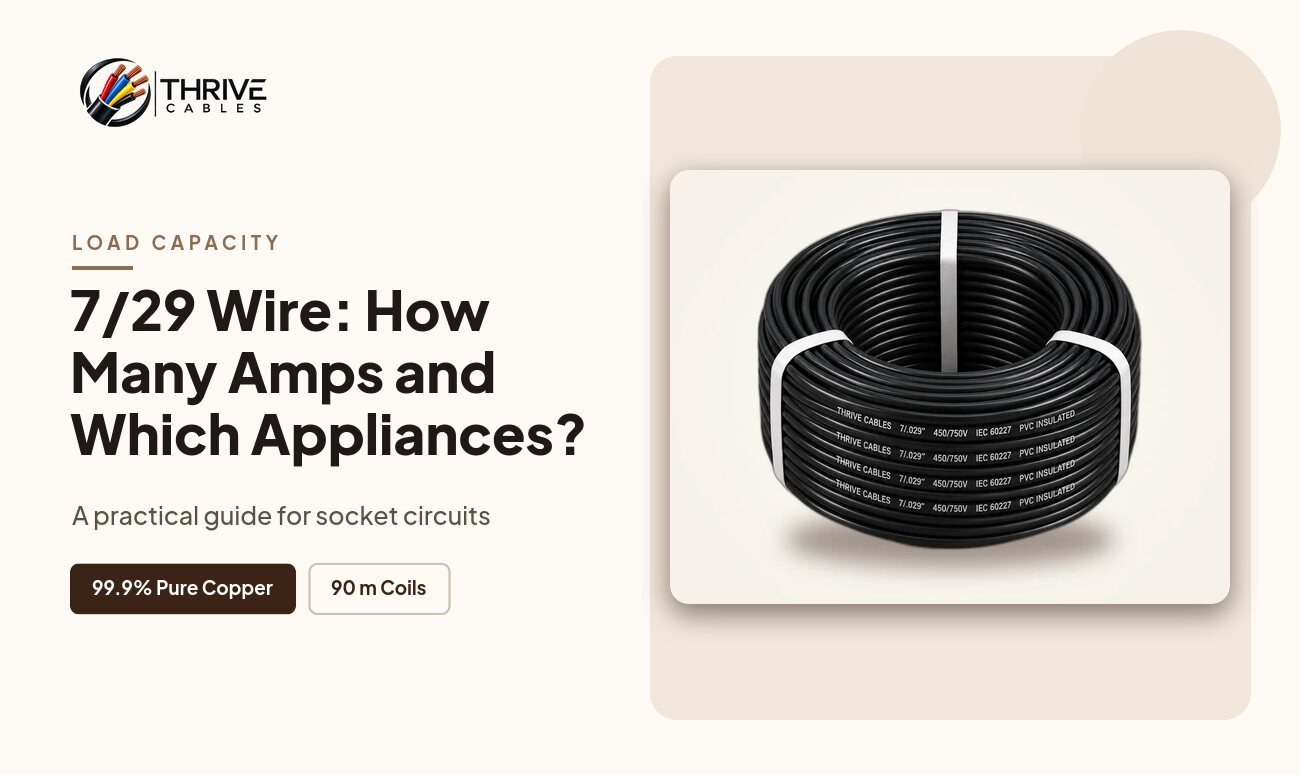
7/29 is one of the most familiar wire sizes in Pakistan. Electricians have used it for decades for sockets and general house wiring, and many people still ask for it by name at the shop. The two questions that follow are always the same: how many amps can 7/29 carry, and which appliances can it run?
This guide gives clear answers, with a practical appliance table and the mistakes to avoid when wiring with 7/29.
7/29 Wire at a Glance
Detail
7/29 wire
Construction
7 strands, each 0.029 inch thick
Cross-section
About 3 mm²
Typical current (in conduit)
Roughly 22 to 27 A
Common breaker
16 A to 20 A (as advised)
Rough load at 230 V
About 4 to 5 kW per circuit
Main use
Sockets, kitchen points, general power circuits
What Does 7/29 Mean?
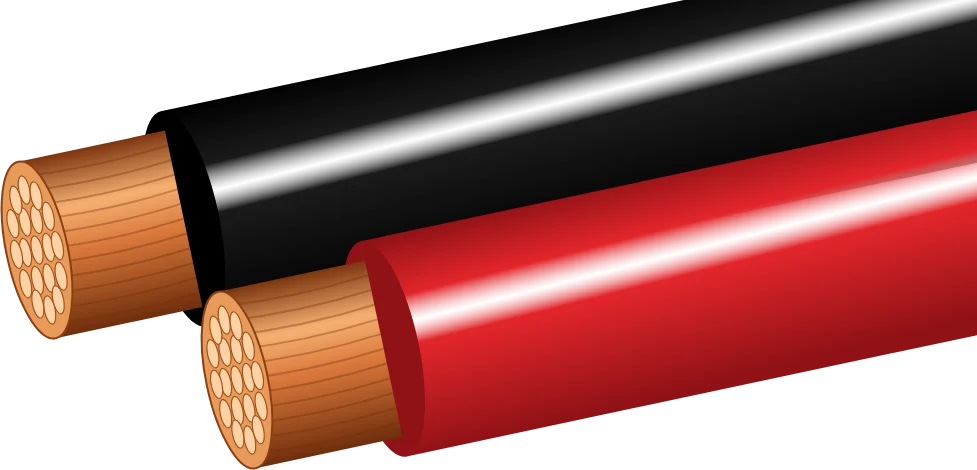
7/29 means 7 copper strands, each 0.029 inch (about 0.74 mm) thick. Together they make about 3 mm² of copper. That places 7/29 slightly above the metric 2.5 mm² size, which is why it has long been trusted for socket circuits that carry plug-in appliances.
How Many Amps Can 7/29 Wire Carry?
In a typical home installation, inside conduit in a wall, 7/29 can carry roughly 22 to 27 A. The exact figure depends on:
How many circuits share the conduit. More wires together means more heat and less safe current.
The temperature around the wire. Roof slabs in a Pakistani summer get very hot.
The length of the run. Long runs lose more voltage.
That is why 7/29 circuits are normally protected with a 16 A or 20 A breaker, leaving a safety margin below the wire’s limit.
Which Appliances Can 7/29 Wire Run?
Appliance
Typical power
On a 7/29 circuit?
TV, router, laptop, chargers
Under 300 W
Yes
Fridge / deep freezer
100 to 400 W
Yes
Washing machine
Up to about 2 kW
Yes
Iron
1 to 2 kW
Yes
Microwave / kettle
1 to 2 kW
Yes, avoid running many at once
Water dispenser
500 W to 700 W
Yes
1 ton AC (short run)
About 1 to 1.3 kW
Possible on its own line, 4 mm² preferred
1.5 to 2 ton AC
1.5 to 2.8 kW
No, use 4 mm²
Electric geyser / oven
2 to 3.5 kW
No, use 4 mm²
Always check the rating plate of the appliance and follow your electrician’s advice for the final choice.
Running the AC on the socket circuit. Even a small AC on a shared 7/29 circuit overloads it on hot days.
One circuit for the whole house. Split sockets into several circuits by room or floor.
Breaker too large. A 32 A breaker does not protect 7/29.
Buying “7/29” with fewer or thinner strands. Count the strands and check that the copper is bright and pure. Our guide on identifying fake electric wire shows how.
No earth wire. Socket circuits must carry an earth conductor.
Why Choose Thrive Cables 7/29 Wire
Thrive Cables manufactures 7/29 single core copper wire in Lahore with 7 full-thickness strands of 99.9% pure copper and fire-retardant PVC insulation, in full-length 90 m coils and 7 colours. Order at factory price on WhatsApp at +92 324 6570645.
Frequently Asked Questions About 7/29 Wire
How many amps can 7/29 wire carry?
Roughly 22 to 27 A in conduit, depending on installation. It is usually protected by a 16 A or 20 A breaker.
Is 7/29 equal to 2.5 mm²?
Not exactly. 7/29 has about 3 mm² of copper, slightly more than 2.5 mm². Both are used for socket circuits.
Can 7/29 run a 1.5 ton AC?
It is not recommended. A 1.5 ton AC should have its own 4 mm² line. See our AC wire size guide.
Can I use 7/29 for lights?
You can, but it is more than lights need. 1 mm² or 3/29 is enough for lighting and saves cost.
Conclusion
7/29 is a dependable socket and general power wire that carries roughly 22 to 27 A in conduit. It runs fridges, washing machines, irons, microwaves and everyday electronics comfortably. Keep air conditioners, geysers and ovens on their own 4 mm² lines, split sockets into sensible circuits and confirm the plan with a qualified electrician.