When a building outgrows a single phase supply, the conversation with the electrician quickly turns to three-phase, a bigger meter and a heavier main line. The wire size that comes up most often at that stage is 7/64, also called 16 mm². It is the thickest single core wire used in most homes and shops in Pakistan, and choosing it correctly decides how safely the whole building runs.
This guide explains what 7/64 wire is, how much load it can carry, where it should and should not be used, and how to plan a three-phase main line with it.
Here is a quick summary of the size before going into the details.
| Detail | 7/64 (16 mm²) wire |
|---|---|
| Construction | 7 strands, each 0.064 inch thick |
| Cross-section | About 14.5 mm² (sold as the 16 mm² class) |
| Typical current (in conduit) | Roughly 65 to 75 A |
| Common breaker | 63 A (as advised by the electrician) |
| Main use | Main line from meter to DB, three-phase feeders |
| Coil length | 45 m and 90 m |
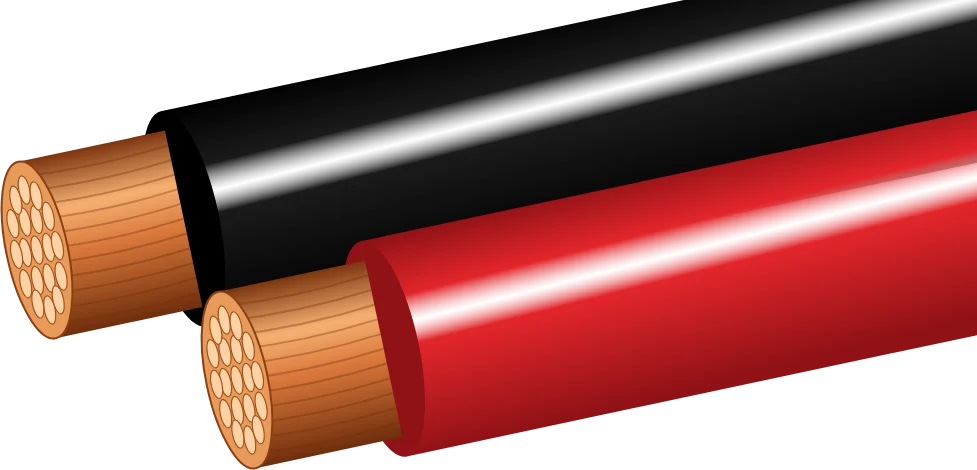
The name describes how the conductor is built. The first number, 7, is the number of copper strands. The second number, .064, is the thickness of each strand in inches. Seven strands of 0.064 inch copper give a total copper area of about 14.5 mm², which is why the wire is sold in the 16 mm² class.
Stranding matters at this size. A single solid copper rod of the same area would be stiff and hard to pull through conduit. Seven strands keep the wire bendable enough to route from the meter to the distribution board without damaging the insulation.
The current a wire can safely carry depends on how it is installed, not only on its size. Wire inside a crowded conduit or a hot roof runs warmer than wire in open air, so it must carry less current.
On a single phase 230 V supply, 65 A is about 15 kW of load. On a three-phase 400 V supply, the same wire on each phase can feed roughly three times that, as long as the load is balanced across the three phases. These figures are a guide only. Your electrician should size the breaker and confirm the wire for your exact load and installation.
Because it is heavy and carries a lot of current, 7/64 is used where the whole building’s load passes through one line.
A 1 kanal house, or any home with several air conditioners, an electric oven and a large water pump, often needs a main line that can carry 60 A or more. 7/64 is the usual choice for the meter-to-DB line in these homes.
When a building moves to three-phase, each phase needs its own conductor plus a neutral. For larger three-phase loads, 7/64 is commonly used for the three phase wires and the neutral, with the earth sized as the electrician advises.
Commercial buildings run many machines, lights and air conditioners for long hours. 7/64 is used for their feeders from the meter room to each floor or unit board.
When the meter is far from the distribution board, a thinner wire can lose too much voltage on the way. Using 7/64 in place of a thinner size keeps the voltage drop low so appliances get a steady supply. For a direct comparison with the next size down, see 7/52 vs 7/64 wire in Pakistan.
Bigger is not always better. Using 7/64 for small circuits wastes money and makes the work harder.
A three-phase main line has more wires and more decisions than a single phase one. These steps keep it simple.
This table shows where 7/64 sits among the main line sizes used in Pakistan.
| Building | Typical main line |
|---|---|
| Small house, light load | 7/44 (6 mm²) |
| Medium house, 2 to 3 ACs | 7/52 |
| Large house, three-phase, shops | 7/64 (16 mm²) |
For every size used in a home, see our electric wire size chart in Pakistan.
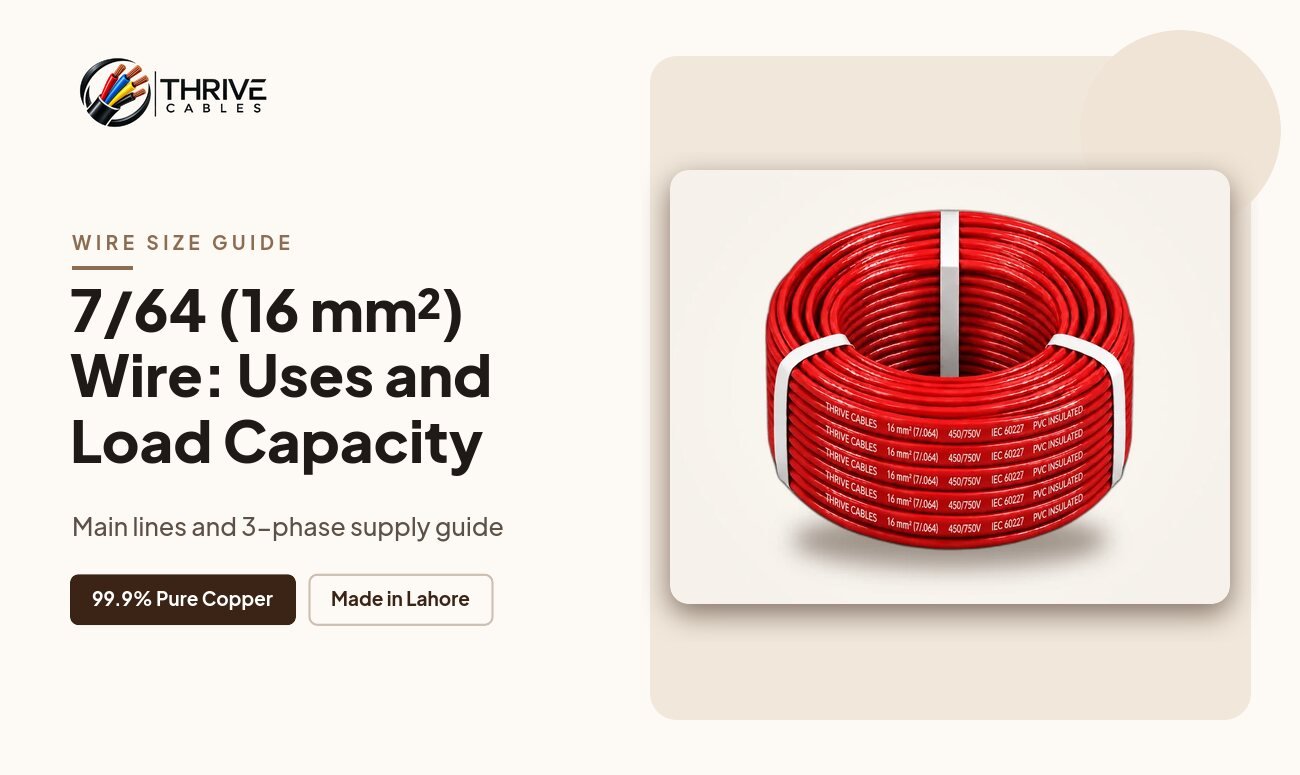
Thrive Cables manufactures 7/64 (16 mm²) single core wire in Lahore with 99.9% pure electrolytic copper and fire-retardant PVC insulation. Every coil has the full 7 strands at the correct thickness, and it is supplied in 45 m and 90 m coils in 7 colours, so phase, neutral and earth can be marked clearly. Dealers and contractors across Pakistan can order at factory price on WhatsApp at +92 324 6570645.
Is 7/64 the same as 16 mm² wire?
Yes. 7/64 has a copper area of about 14.5 mm², and it is sold and used as the 16 mm² class of wire in Pakistan.
How many amps can 7/64 wire carry?
Inside conduit, roughly 65 to 75 A, depending on how it is installed and how hot the surroundings are. Your electrician should confirm the exact rating and breaker.
Do I need 7/64 for a 10 marla house?
Not always. Many 10 marla houses run well on 7/52. If the house has many air conditioners, an electric oven or a three-phase supply, 7/64 gives extra safety margin.
Can I use 7/64 for an AC line?
It will work, but it is far more than an AC needs. A 1.5 or 2 ton AC is normally wired with 7/36 (4 mm²). See our AC wire size guide.
What is the price of 7/64 wire in Pakistan?
The price follows the copper market and changes often. Check the live price on the product page or contact Thrive Cables on WhatsApp for the latest factory price.
7/64 is the heavy-duty main line wire for large houses, three-phase supplies and commercial units. It carries roughly 65 to 75 A in conduit, keeps voltage drop low on long runs and gives room for future load. Use it where the whole building’s current passes through one line, use thinner sizes for room circuits, and always have a qualified electrician confirm the final size and breaker for your installation.
Tell us the size and quantity. We reply on WhatsApp the same day.