Walk into any electrical shop in Pakistan and the two wire sizes you will hear most often are 3/29 and 7/29. They sit side by side on the shelf, often in the same colours, and to someone who is not an electrician they can look almost identical. Yet choosing the wrong one can mean a socket that heats up behind the wall, a breaker that keeps tripping, or money wasted on copper you never needed.
So what is the real difference between 3/29 and 7/29 wire, and which one should you use in your home, shop, or office? In this guide, we explain what the numbers mean, how the two sizes compare, where each one belongs, and the common mistakes to avoid, so you can make the right choice with confidence.
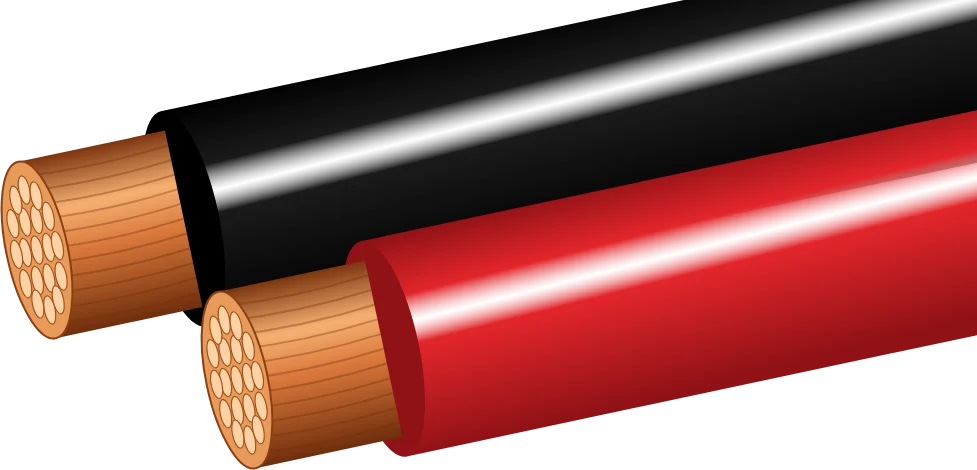
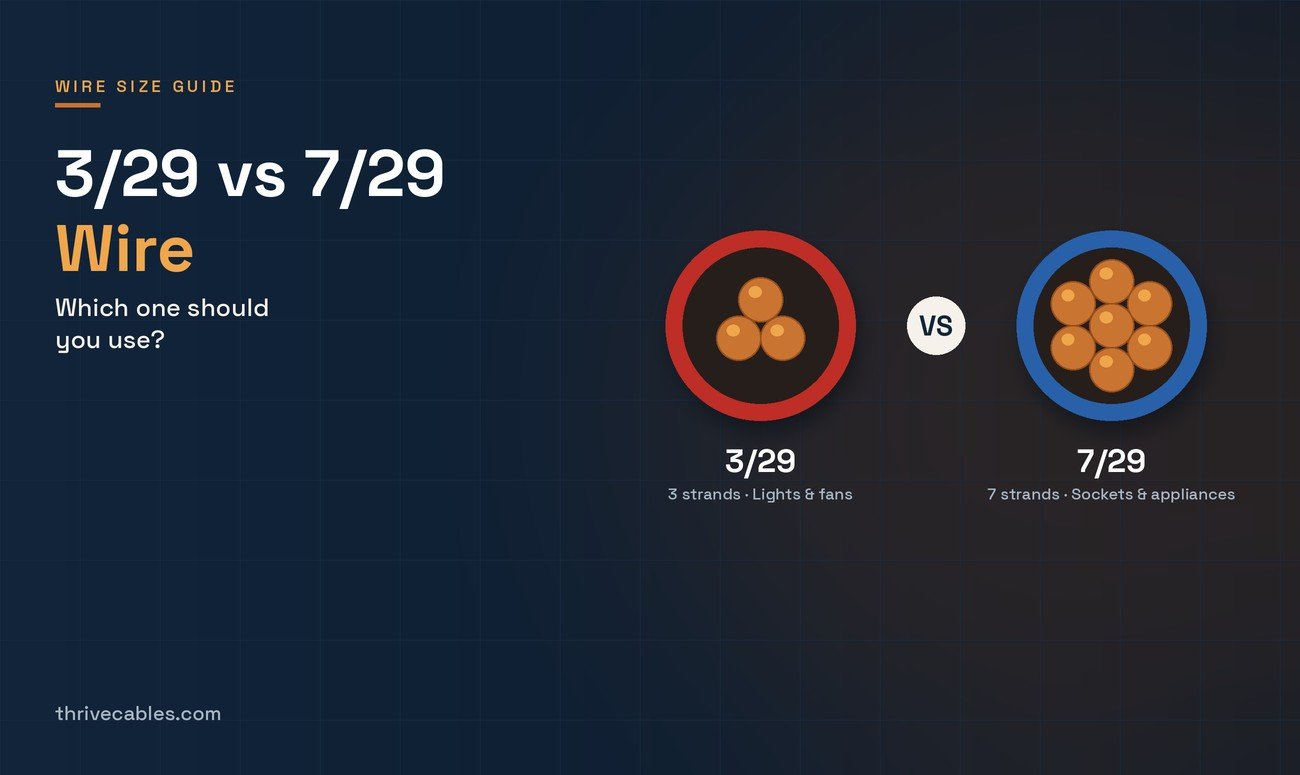
Both names come from the imperial system that electricians in Pakistan have used for decades. The first number is the number of copper strands inside the wire, and the second number is the diameter of each strand in thousandths of an inch.
3/29 (written 3/.029″) has 3 copper strands, each 0.029 inch (about 0.74 mm) thick. Together they give an approximate copper cross-section of 1.29 mm².
7/29 (written 7/.029″) has 7 copper strands of exactly the same thickness, 0.029 inch each. Together they give an approximate copper cross-section of 2.98 mm².
In other words, the strands are the same size, but 7/29 simply has more of them. That means 7/29 carries more than twice as much copper as 3/29, and that extra copper is what allows it to handle heavier electrical loads safely.
| Feature | 3/29 Wire | 7/29 Wire |
|---|---|---|
| Number of strands | 3 | 7 |
| Strand diameter | 0.029 inch (0.74 mm) | 0.029 inch (0.74 mm) |
| Approx. cross-section | 1.29 mm² | 2.98 mm² |
| Nearest metric size | Slightly above 1 mm² | Slightly above 2.5 mm² |
| Load type | Light loads | Medium to heavy loads |
| Typical use | Lights, fans, switch wiring | Sockets, appliances, geysers, AC points |
| Flexibility | Easy to pull and bend | Slightly stiffer, still easy in conduit |
| Price per coil | Lower | Higher, as it contains more copper |
3/29 wire is designed for circuits that carry light loads. Because it contains less copper, it is more economical, and using it in the right places keeps your wiring cost down without affecting safety. It is the standard choice for:
In a typical house in Pakistan, most of the lighting and fan circuits can be wired with 3/29, which is why it is one of the highest-selling wire sizes in the market.
7/29 wire is built for circuits where appliances draw more current. With more than twice the copper of 3/29, it stays cool under loads that would make a thinner wire overheat. It is the right choice for:
For most socket circuits in homes, shops, and offices, 7/29 is the safer and more reliable option.
The exact current a wire can carry depends on how it is installed, the length of the run, whether it is in conduit with other wires, and the surrounding temperature. As a general guide, 3/29 wire is suitable for light circuits of roughly 10 to 13 amps, while 7/29 wire can handle roughly 20 to 24 amps in normal house wiring conditions.
To put that in simple terms, a circuit of lights and fans rarely draws more than a few amps, which suits 3/29 perfectly. A single iron, geyser, or kettle, on the other hand, can draw 8 to 10 amps on its own, and a socket circuit may run several appliances at once. That is exactly why sockets need the extra copper of 7/29.
Always ask a qualified electrician to confirm the correct size for your specific load and installation.
This is one of the most common questions we receive. 7/29 can be used for a smaller AC on a short, dedicated run. However, for 1.5-ton and 2-ton split ACs, or where the AC point is far from the distribution board, many electricians in Pakistan prefer 7/36 (4 mm²) wire. The thicker conductor reduces voltage drop, keeps the wire cooler during long summer hours, and puts less strain on the compressor. If you are unsure, it is always safer to go one size up for an AC point.
Using 3/29 for sockets: This is the most common and most dangerous mistake. A socket circuit may power an iron, a heater, or a kettle, and 3/29 wire can overheat under that load, damaging insulation over time and creating a fire risk.
Using 3/29 for the AC or geyser: Heavy appliances need a thicker conductor. Using 3/29 here can lead to burnt sockets, tripping breakers, and poor appliance performance.
Using 7/29 everywhere to “be safe”: While 7/29 on a lighting circuit is not dangerous, it adds unnecessary cost across an entire house. Using 3/29 where it belongs can save a meaningful amount on a full wiring job.
Buying undersized wire sold under the correct name: A “7/29” coil with only 6 strands, or with strands thinner than 0.029 inch, will not perform like genuine 7/29. Always count the strands and check the quality before you buy.
Technically, yes. Using 7/29 on lighting circuits will work safely, because a thicker wire can always carry a lighter load. The only downside is cost. A house wired entirely in 7/29 uses far more copper than it needs, which can add a significant amount to your wiring budget. The smart approach is to match each circuit to the right size: 3/29 for lighting and fans, 7/29 for sockets and appliances, and larger sizes where the load demands it.
Here is how a typical home in Pakistan is usually wired:
| Circuit | Recommended wire |
|---|---|
| Lights and fans | 3/29 (or 1 mm²) |
| Power sockets and appliances | 7/29 (or 2.5 mm²) |
| Geyser and water pump | 7/29 (or 2.5 mm²) |
| Split AC (1.5 to 2 ton) | 7/36 (4 mm²) |
| Main line from meter to DB | 7/44 or larger |
| Earthing | 1/44 solid earthing wire |
This is a general guide only. Your electrician should size each circuit according to your actual load, cable length, and installation method.
Choosing the right size only helps if the wire you buy is genuinely that size. Low-quality coils in the market sometimes have fewer strands, thinner strands, mixed metal, or shorter length than the label claims. Before you buy, count the strands, check that the copper is bright and reddish all the way through, and make sure the manufacturer’s name and size are printed clearly on the insulation. Our guide on how to identify fake or low-quality electric wire explains these checks in detail.
At Thrive Cables, both our 3/.029″ and 7/.029″ wires are made from pure copper, checked for strand diameter during production, insulated with fire-retardant PVC, and measured for full length before they are sealed at our facility in Lahore.
The difference between 3/29 and 7/29 wire comes down to copper. With the same strand thickness, 7/29 simply has more strands, giving it more than twice the capacity of 3/29. Use 3/29 for lights, fans, and switch wiring where loads are light, and choose 7/29 for sockets, appliances, geysers, and smaller AC points where the load is heavier. Matching each circuit to the right size keeps your home safe and your wiring cost under control.
Tell us the size and quantity. We reply on WhatsApp the same day.