Solar systems are going up on rooftops across Pakistan, and every installation raises the same question: “Solar ke liye kaunsi wire lagegi?” The answer depends on which part of the system you are wiring. A solar system has two very different sides, DC and AC, and each needs its own type of cable. Using ordinary house wire in the wrong place is one of the most common and dangerous mistakes in solar installations.
This guide explains which wire goes where, and gives practical sizes for the AC side from the inverter to your DB.
| Part | Type of power | Cable to use |
|---|---|---|
| Solar panels to inverter | DC | Dedicated solar DC cable |
| Battery to inverter | DC (high current) | Heavy battery cable as the inverter manual specifies |
| Inverter output to DB | AC (230 V) | Single core copper house wire, sized for the inverter |
| DB to house circuits | AC (230 V) | Normal house wiring sizes |
The cable from the panels to the inverter runs on the roof in direct sun, heat and rain for 20 years or more, and carries DC at high voltage. It needs special solar DC cable that is:
Ordinary PVC house wire is not designed for this job and should not be used for panel strings. The battery cables between the battery and inverter carry very high current and must follow the inverter manufacturer’s size and lug requirements.
Thrive Cables does not manufacture solar DC cable. For the DC side, use cable your installer specifies for solar use.
Once the inverter converts DC to AC, the output is normal 230 V power, and the wiring follows the same rules as house wiring. The wire must carry the inverter’s maximum output current.
Inverter output current ≈ inverter power in watts ÷ 230 (single phase).
| Inverter size (single phase) | Max output current (approx.) | Typical AC wire, inverter to DB |
|---|---|---|
| 3 kW | About 13 A | 7/36 (4 mm²); 7/29 on short runs |
| 5 kW | About 22 A | 7/36 (4 mm²); 7/44 on long runs |
| 6 kW | About 26 A | 7/44 (6 mm²) |
| 8 to 10 kW | About 35 to 43 A | 7/52 (10 mm²) |
| 10 kW three-phase | About 15 A per phase | 7/36 (4 mm²) per phase, as advised |
These are guide sizes. Always check the maximum AC output current and the recommended wire in your inverter’s manual, and have your installer confirm the size for the run length.
On a sunny day the inverter can deliver close to its maximum power for many hours. The AC wire carries that current continuously, often through a hot roof, so it needs a good margin.
On net-metered systems the inverter pushes power back to the grid. A thin or long AC cable raises the voltage at the inverter, which can make the inverter trip or reduce output. A thicker AC cable keeps the system running smoothly.
Hybrid inverters often have separate “grid” and “load” (backup) terminals. Each needs a correctly sized wire to its own DB or circuits, with the right breakers.
Usually not, if your existing wiring is sound and correctly sized. The inverter feeds your DB, and your existing circuits carry the load as before. But if your main line or DB is old or undersized, solar is a good time to upgrade. See when to rewire your house and the wire load capacity chart.
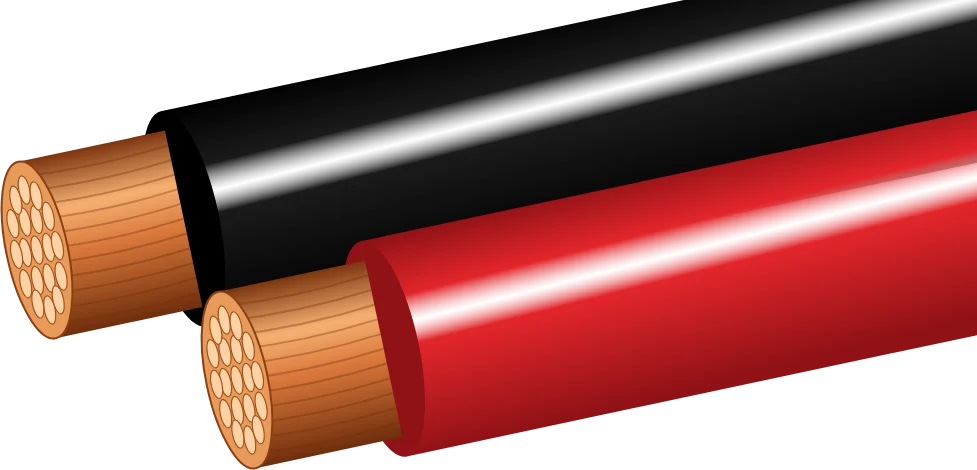
Thrive Cables makes the single core copper wire used on the AC side, from inverter to DB and through the house: 7/29, 7/36, 7/44, 7/52 and 7/64, with 99.9% pure copper and fire-retardant PVC insulation, made in Lahore. Order at factory price on WhatsApp at +92 324 6570645.
Which wire is used for a solar system in Pakistan?
Solar DC cable from the panels to the inverter, heavy battery cable for batteries, and single core copper house wire on the AC side from the inverter to the DB.
Which wire for a 5 kW inverter to DB?
7/36 (4 mm²) is typical for a short run; use 7/44 for longer runs. Check the inverter manual.
Can I use house wire for solar panels?
No. Panel strings on the roof need UV-resistant, double-insulated solar DC cable.
Does Thrive Cables make solar DC cable?
No. Thrive Cables makes single core copper wire for the AC side and house wiring.
A solar system needs the right cable on each side: solar DC cable for panel strings, heavy cable for batteries, and properly sized copper house wire on the AC side. Size the inverter-to-DB wire from the inverter’s maximum output current, give it a margin for long sunny hours and hot roofs, and follow the inverter manual and your installer’s advice.
Tell us the size and quantity. We reply on WhatsApp the same day.