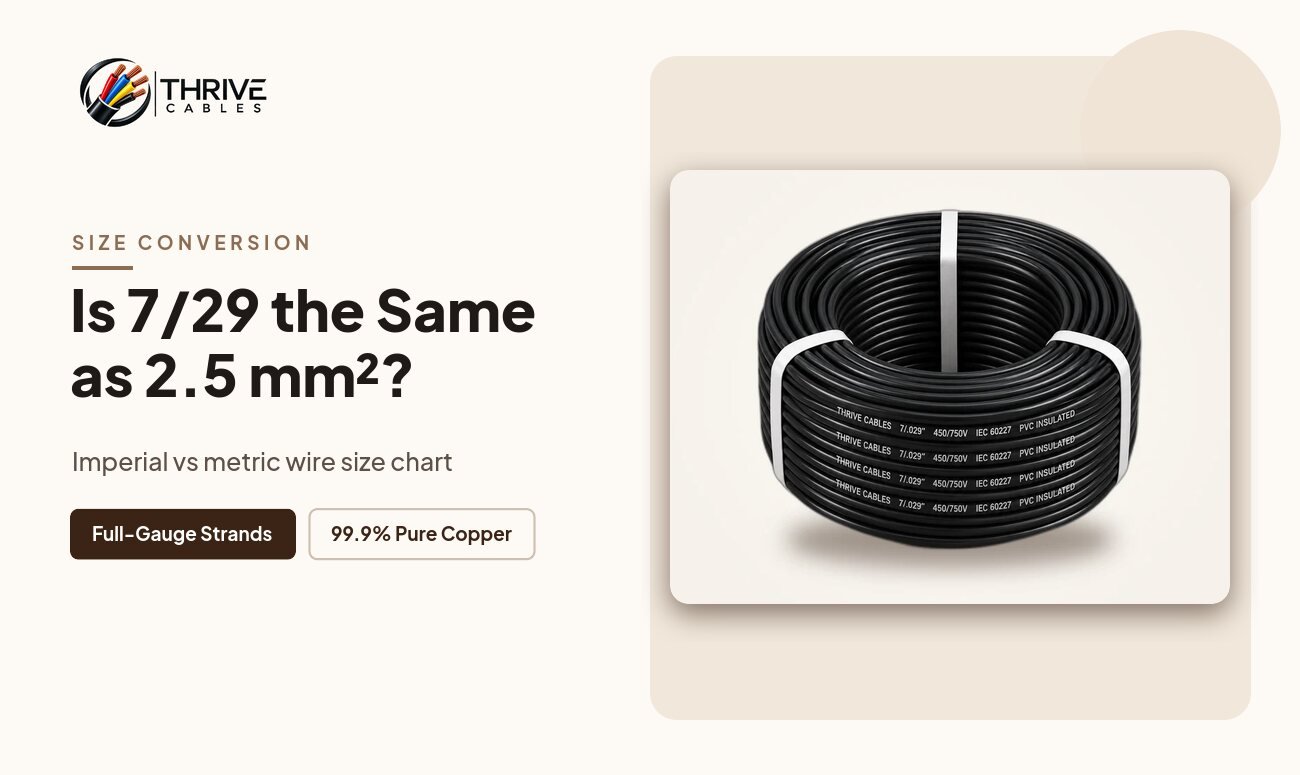
Ask for wire in a Pakistani market and you will hear two languages at once. One electrician asks for “7/29” and “7/36”, another asks for “2.5 mm” and “4 mm”, and the dealer uses both. The imperial sizes come from the old British system still common in Pakistan, while the metric sizes follow international standards. Mixing them up can lead to buying the wrong wire.
This guide explains how both systems work, gives an exact conversion for every common size, and answers the most asked question: is 7/29 the same as 2.5 mm²?
How Imperial Wire Sizes Work
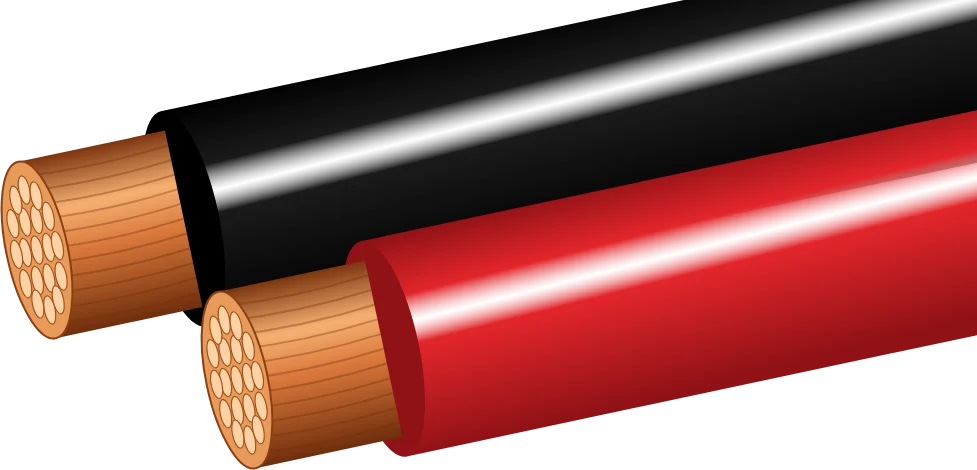
An imperial size like 7/.029 has two parts:
7 is the number of copper strands.
.029 is the diameter of each strand in inches.
So 7/.029 means seven strands, each 0.029 inch (0.737 mm) thick. In everyday use the dot is often dropped, so you will see 7/29, 7/36, 7/44 and so on.
How Metric Wire Sizes Work
A metric size like 2.5 mm² gives the total cross-sectional area of copper in square millimetres. It does not say how many strands there are. Note that “2.5 mm” in the market means 2.5 square millimetres of area, not 2.5 mm thickness.
How to Convert Imperial to Metric
To find the copper area of an imperial wire:
Convert the strand diameter to millimetres (inches × 25.4).
Work out the area of one strand: 3.1416 ÷ 4 × diameter × diameter.
Multiply by the number of strands.
Example for 7/.029: 0.029 × 25.4 = 0.737 mm. One strand = 0.7854 × 0.737 × 0.737 = 0.426 mm². Seven strands = about 2.98 mm².
Not exactly. 7/29 has about 2.98 mm² of copper, roughly 19% more than 2.5 mm². In practice both are used for the same job, socket circuits, and they are treated as the same class. If you want a little extra margin on kitchen or heavier socket circuits, 7/29 gives you that. See 2.5 mm² wire for sockets and 7/29 load capacity.
Other Common Questions
Is 7/36 the same as 4 mm²?
7/36 has about 4.6 mm², slightly more than 4 mm². It is used as the 4 mm² class for AC and appliance lines.
Is 7/64 really 16 mm²?
7/64 has about 14.5 mm², a little less than 16 mm², but it is used as the 16 mm² class for main lines. If a design calls for a full 16 mm² metric conductor, confirm the requirement with the engineer.
Thrive Cables makes both imperial and metric house wire in Lahore: 1 mm², 2.5 mm², 3/29, 7/29, 7/36, 7/44, 7/52, 7/64 and 1/.044 earthing wire. Every size uses 99.9% pure copper with full-thickness strands and fire-retardant PVC insulation. Order at factory price on WhatsApp at +92 324 6570645.
Conclusion
Imperial sizes like 7/29 tell you the strand count and thickness, while metric sizes like 2.5 mm² tell you the copper area. 7/29 is about 2.98 mm² and is used in the 2.5 mm² class, 7/36 is the 4 mm² class, 7/44 the 6 mm² class, 7/52 the 10 mm² class and 7/64 the 16 mm² class. Use the chart above to compare quotes and make sure every coil has the strands and thickness its label claims.