Once a house moves past sockets and lighting, the choice usually narrows to two sizes: 7/36 and 7/44. Both are seven-strand copper wires, both look similar on the shelf, and both are sold for “heavy” circuits. Yet using the wrong one can mean a main line that heats up every summer evening, or money spent on copper the circuit never needed.
So what is the real difference between 7/36 and 7/44 wire, and which one belongs in your installation? This guide breaks down the copper, the load each one handles, where each belongs in a Pakistani home or shop, and the mistakes to avoid.
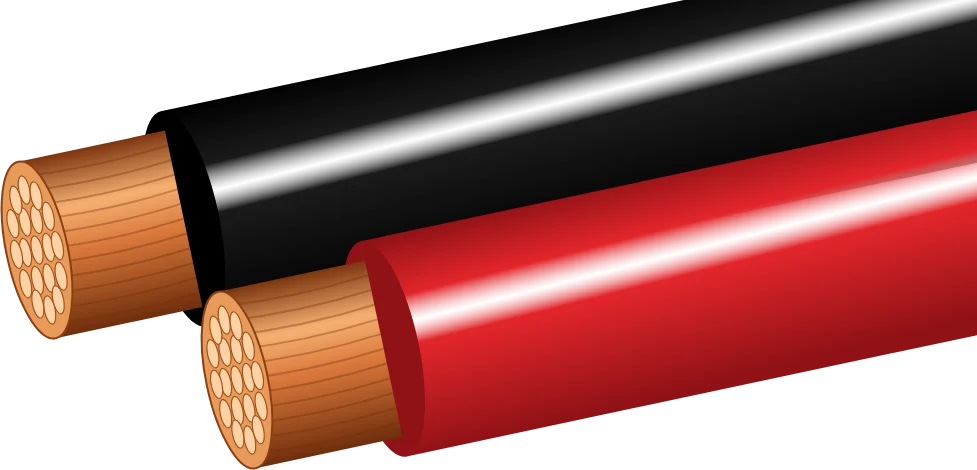
Both names come from the imperial system that electricians in Pakistan use every day. The first number is the count of copper strands inside the wire, and the second is the diameter of each strand in thousandths of an inch.
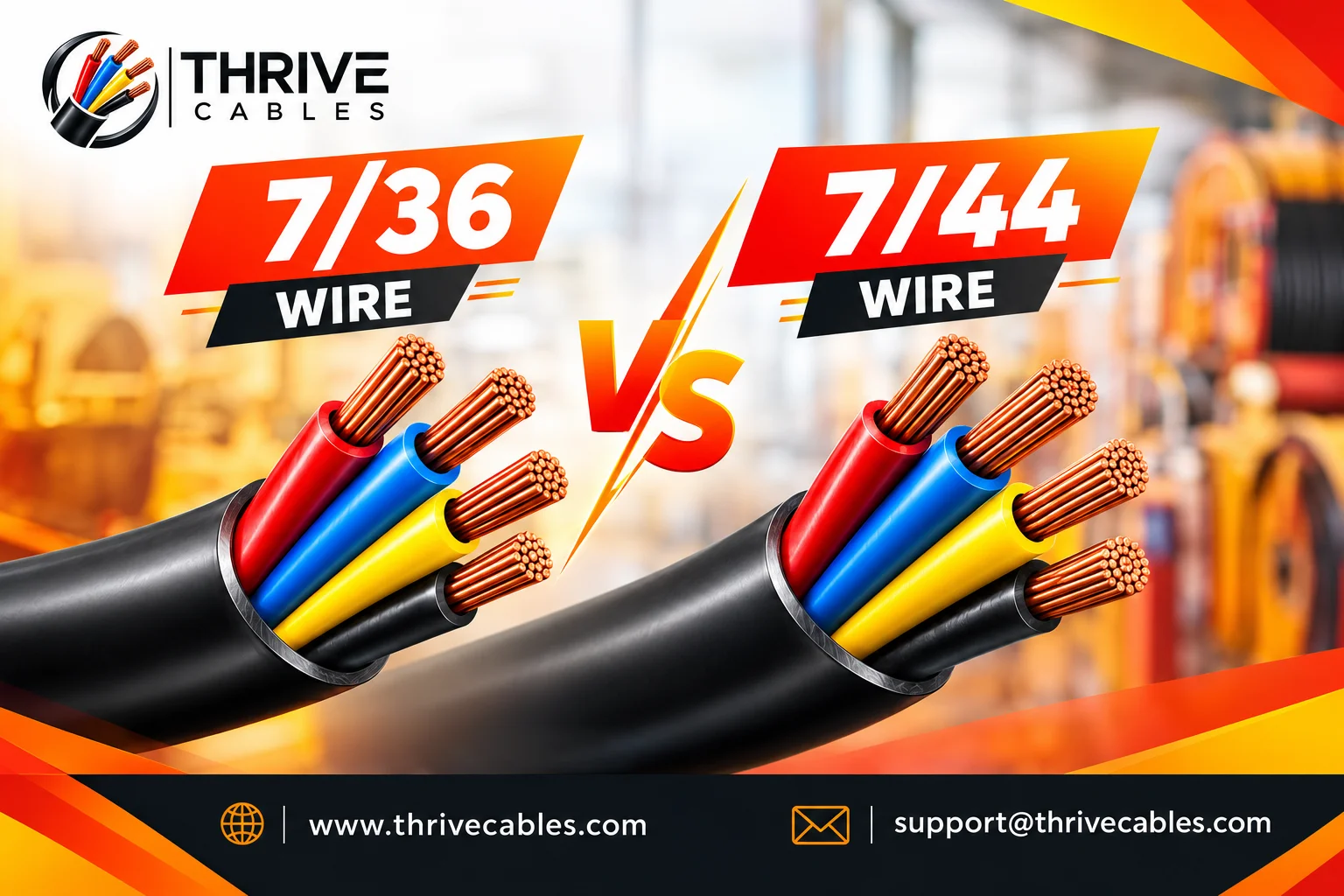
7/36 (written 7/.036″) has 7 copper strands, each 0.036 inch thick, and is sold in the market as the 4 mm² size.
7/44 (written 7/.044″) also has 7 strands, but each is 0.044 inch thick, and it is sold as the 6 mm² size.
The strand count is identical; only the thickness changes. Because current capacity depends on the total copper in the conductor, that thicker strand is what separates an appliance circuit from a whole-house main line.
| Feature | 7/36 Wire | 7/44 Wire |
|---|---|---|
| Number of strands | 7 | 7 |
| Strand diameter | 0.036 inch (0.91 mm) | 0.044 inch (1.12 mm) |
| Sold as | 4 mm² | 6 mm² |
| Typical load | Heavy appliance circuits | Whole-house and sub-main loads |
| Common use | AC points, geysers, motors, sub-circuits | Meter to distribution board, floor sub-mains |
| Voltage drop on long runs | Higher than 7/44 | Lower, better for long distances |
| Cost per coil | Lower | Higher, roughly 50% more copper |
The exact figure depends on the installation: how long the run is, how many wires share the conduit, the ambient temperature, and the supply voltage. As a general guide in normal house wiring, 7/36 handles roughly 24 to 28 amps, while 7/44 handles roughly 31 to 36 amps.
In everyday terms, 7/36 comfortably feeds one heavy appliance such as a 1.5 or 2 ton air conditioner. 7/44 is sized for a line that carries many circuits at once: lights, fans, sockets, and two or three ACs all drawing together on a summer evening.
Always have a qualified electrician confirm the size against your actual load and cable length.
7/36 is the right choice for dedicated circuits that feed a single heavy appliance or a small group of them:
On these circuits, 7/44 would work safely but would add cost without adding any real benefit, because the load never approaches its capacity.
7/44 belongs wherever one conductor carries the combined load of many circuits:
Using 7/36 in these positions is the most common sizing mistake in Pakistani homes. It may run fine in winter, then trip breakers or overheat at the meter connection once every AC in the house starts together.
Voltage drop grows with length, so a wire that is correct at ten meters can be undersized at thirty. Where a run is long, moving up from 7/36 to 7/44 keeps voltage closer to its proper level at the far end, which protects compressors and motors from running hot on low supply.
As a working rule: if a heavy appliance point is unusually far from the distribution board, or your area already suffers voltage drops in the evening, choose the larger size.
Choosing between these two sizes is rarely a technical problem; it is usually a budget decision made in a hurry at the shop counter. The mistakes below cost far more later than the copper saved on the day, because fixing them means opening walls, replacing breakers, or repairing an appliance that ran on weak supply for months.
Using 7/36 for the main line. Tempting because it is cheaper, but the main line carries everything in the building at once. This is where 7/44 belongs.
Choosing by tonnage alone. A 2 ton AC twenty-five meters from the board is a different job from the same AC ten meters away. Always factor in distance.
Mixing sizes on the same run. A 7/44 main line that passes through a short section of 7/36 is only as strong as its weakest part.
Assuming aluminium of the same size is equivalent. Aluminium carries less current for the same cross-section and loosens at terminals over time. On heavy circuits, use copper.
Buying undersized wire sold under the right name. A “7/44” coil with thinner strands will not perform like genuine 7/44. Check the strand thickness before you buy.
| Circuit | Recommended wire |
|---|---|
| Lights and fans | 3/29 or 1 mm² |
| Power sockets | 7/29 or 2.5 mm² |
| AC point, geyser, pump | 7/36 (4 mm²) |
| Main line from meter to DB | 7/44 (6 mm²) |
| Sub-main to another floor | 7/44 (6 mm²) |
| Large homes and three-phase feeders | 7/52 (10 mm²) |
| Earthing | 1/.044″ solid earthing wire |
This is a general guide. Your electrician should size each circuit according to the actual load, run length, and installation method.
At these sizes copper is expensive, so the temptation to cut corners is higher. Before you pay, count the strands, measure the strand diameter with a wire gauge (0.036 inch or 0.044 inch), check that the copper is bright and reddish all the way through, and make sure the manufacturer’s name and size are printed clearly on the insulation. Our guide on how to identify fake or low-quality electric wire explains each of these checks in detail.
At Thrive Cables, both our 7/.036″ and 7/.044″ wires are manufactured in Lahore from pure electrolytic copper, checked for strand diameter during production, insulated with fire-retardant PVC, and measured to full length before they are sealed.
Below are the questions electricians and homeowners ask us most when choosing between these two sizes. If your situation is not covered, share your load and the distance from your distribution board and our team will confirm the right size.
What is the main difference between 7/36 and 7/44 wire?
Both have seven copper strands, but 7/44 strands are thicker. That gives 7/44 around 6 mm² of copper against about 4 mm² for 7/36, so it carries more current and suits main lines.
Which wire is best for the main line of a house?
7/44 (6 mm²) is the usual choice for the main line from the meter to the distribution board in a typical home. Larger houses and three-phase connections often need 7/52 (10 mm²).
Can I use 7/36 for a 2 ton AC?
Yes, 7/36 is a standard choice for a 2 ton AC on a dedicated circuit. For a very long run or weak supply voltage, step up to 7/44.
Is 7/36 the same as 4 mm² and 7/44 the same as 6 mm²?
In the Pakistani market, yes. 7/36 is sold as the 4 mm² size and 7/44 as the 6 mm² size, which is how consultants write them on drawings.
Is 7/44 worth the extra cost?
On a main line or a long run, yes. On a single AC point at normal distance, 7/36 does the job and the extra copper adds cost without benefit.
The difference between 7/36 and 7/44 comes down to strand thickness and the job each wire is built for. Use 7/36 for dedicated heavy appliance circuits such as AC points, geysers, and pumps. Use 7/44 where one conductor carries the whole building: the main line, sub-mains, and feeders supplying several ACs at once. And when the run is long or the supply is weak, going one size up is always the safer decision.
Matching each circuit to the right size keeps your wiring cool, your bills lower, and your walls closed.
Tell us the size and quantity. We reply on WhatsApp the same day.