Buying electric wire looks simple. You walk into a shop, ask for a size, pay, and leave with a coil. But in Pakistan’s wire market, two coils with the same label and the same colour can be completely different on the inside. One carries honest pure copper at its full size and length. The other may have thinner strands, mixed metal, weak insulation, or ten meters missing from the coil.
The problem is that bad wire does not fail on the day you install it. It fails months or years later, hidden inside your walls, in the form of burnt switchboards, tripping breakers, rising electricity bills, and in the worst cases, electrical fires.
The good news is that you do not need a laboratory to protect yourself. In this guide, we explain how to check wire quality with simple tests you can do at the shop or on site, so you can spot fake or low-quality electric wire before it goes into your home or project.
Copper is expensive, and its price changes almost every week. That creates a strong temptation for some manufacturers to cut costs in ways customers cannot easily see. The most common shortcuts are using fewer or thinner copper strands than the label claims, mixing copper with cheaper metals or using copper-coated aluminium, applying thin or recycled PVC insulation that cracks in heat, and winding coils that are shorter than the length printed on the pack.
Each of these saves the seller a little money per coil, but costs the buyer far more in safety, performance, and future repairs.
You do not need special training or expensive equipment to judge a coil of wire. Most of the checks below take less than a minute and can be done right at the shop counter with your eyes, your hands, and a small cutter. A few, such as measuring strand diameter and coil weight, need a basic tool, but they are worth it on larger orders. Use as many of these tests as you can, because a wire that passes all of them is very likely to be the genuine, full-quality product you are paying for.
Good quality wire has clear, permanent printing along its insulation at regular intervals. Look for the manufacturer’s name, the wire size (for example 7/.029″ or 2.5 mm²), the voltage rating, and the standard it follows. If the printing is missing, blurred, rubs off easily with your thumb, or shows a size without a manufacturer name, treat the wire with suspicion. A manufacturer that stands behind its product puts its name on every meter.
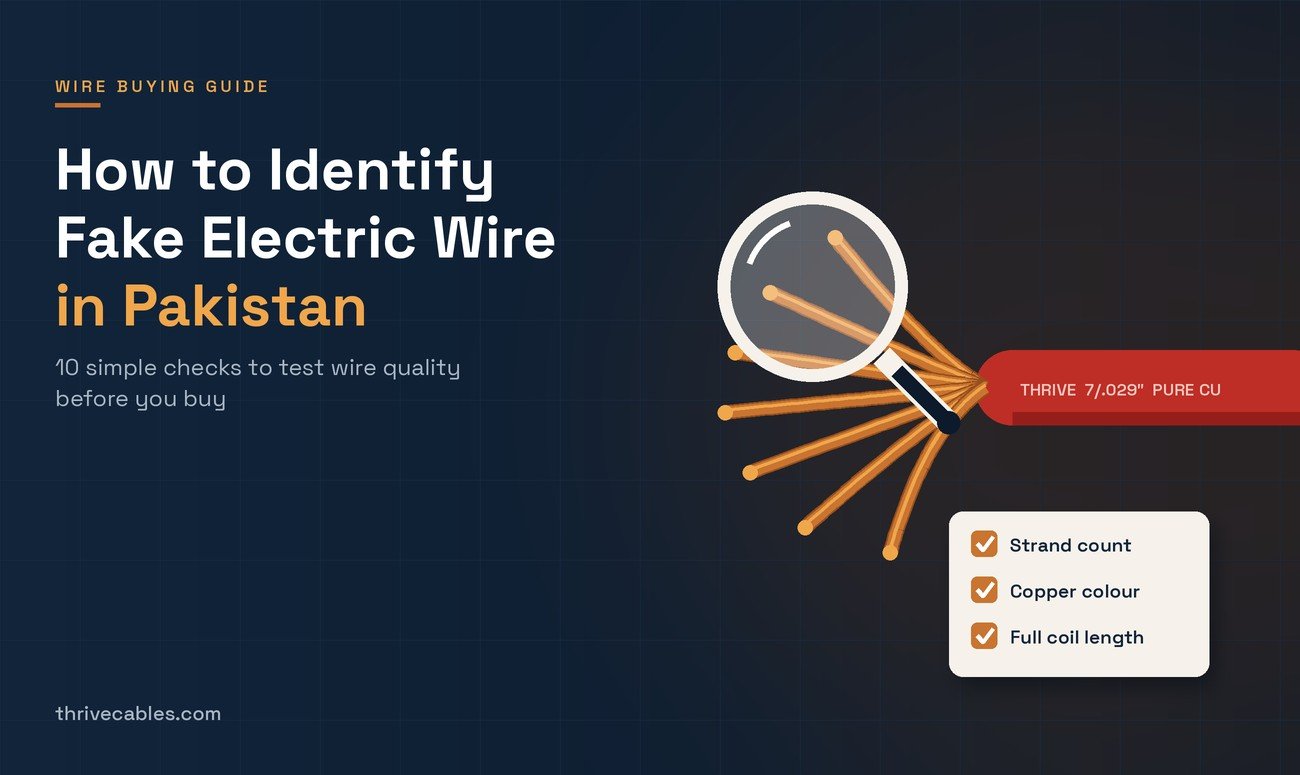
The first number in an imperial wire size tells you how many strands it should have. A 3/.029″ wire must have 3 strands, a 7/.029″ wire must have 7, and a 7/.044″ wire must have 7 heavier strands. Strip a small piece of insulation from the end of the coil and count. If a “7/29” wire shows 6 strands, or the strands look uneven, the conductor has been reduced and the wire will carry less current than you are paying for.
Counting strands is not enough if each strand is thinner than it should be. The second number in the size is the diameter of each strand in inches. Electricians can check this with a wire gauge or a digital micrometer, which are inexpensive and worth keeping in any toolbox. Use this table as a reference:
| Size marking | Strand diameter (inch) | Strand diameter (mm) |
|---|---|---|
| .029″ (3/29, 7/29) | 0.029 | 0.74 |
| .036″ (7/36) | 0.036 | 0.91 |
| .044″ (1/44, 7/44) | 0.044 | 1.12 |
| .052″ (7/52) | 0.052 | 1.32 |
| .064″ (7/64) | 0.064 | 1.63 |
A strand that measures noticeably below these figures means less copper, higher resistance, and more heat in your circuits.
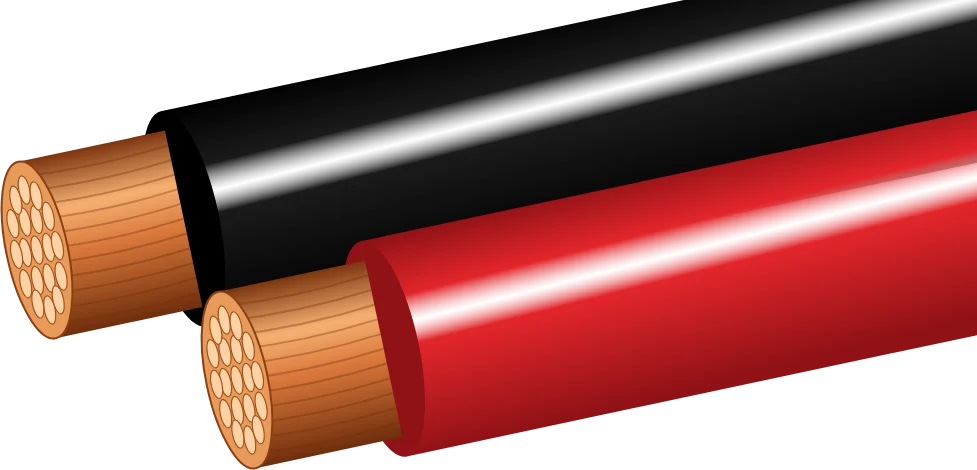
Pure copper has a bright, reddish-orange shine when freshly stripped. Low-quality or mixed conductors often look dull, pale, yellowish, or slightly grey. Be especially careful of copper-clad aluminium (CCA) wire, where a thin copper coating hides an aluminium core. To check, gently scrape the strand with a blade or cut it straight across. If you see silver or white metal underneath the copper colour, it is not a pure copper wire.
Take a stripped strand and bend it back and forth a few times. Pure, properly annealed copper is soft and flexible and will survive several bends before breaking. Wire that feels springy, stiff, or snaps after one or two bends is often made from impure or poorly processed metal, and it can crack inside terminals over time.
Good PVC insulation has an even thickness all around the conductor, a smooth surface, and a consistent colour. Bend the wire into a tight loop: the insulation should stretch without cracking, whitening, or peeling. Also look at the cut end. If the copper sits off-centre, with insulation thick on one side and thin on the other, the thin side is a weak point that can fail under heat. Thin, brittle, or sticky insulation is a clear sign of cheap or recycled PVC.
Copper is heavy, so a full-size, full-length coil has a predictable weight. When you compare two coils of the same size and length, a noticeably lighter coil almost always means less copper, thinner insulation, or a shorter length. Many experienced dealers in Pakistan judge a coil by weight in their hands for exactly this reason. If you buy regularly, ask your supplier for the standard coil weight of each size and check it on a scale.
A coil labelled 90 meters should give you 90 meters. Short coils are one of the most common tricks in the market because customers rarely measure. On a large order, measure at least one coil from each batch. If it falls short, every coil in that batch is likely short as well, and you are paying for copper you never received.
A trustworthy product has a proper label showing the manufacturer’s name, address or contact number, wire size, coil length, colour, and batch or production details. Packaging with no contact information, spelling mistakes, or a label that looks like a copy of a well-known brand is a warning sign. If something goes wrong, you need to know who made the wire.
Copper has a market price that every honest manufacturer has to pay. If one coil is dramatically cheaper than others of the same size, the difference has to come from somewhere, usually from the copper, the insulation, or the length. A small saving on wire is never worth the cost of rewiring a house or repairing damage from an electrical fault.
Undersized or impure conductors have higher resistance, which turns electricity into heat. That heat builds up at joints, sockets, and switchboards, slowly damaging insulation until connections loosen or burn. You may notice warm switches, flickering lights, frequently tripping breakers, or a burning smell. Meanwhile, the extra resistance wastes energy, which shows up quietly in your monthly electricity bill.
For heavy loads such as air conditioners, geysers, and main lines, the risk is much greater. A weak wire on these circuits can overheat quickly during peak summer demand, putting both your appliances and your property at risk.
Before you buy, run through this list:
The simplest way to avoid fake wire is to buy from a manufacturer that tests its products and is willing to stand behind them. At Thrive Cables, every coil is made from pure copper, checked for strand diameter during production, insulated with fire-retardant PVC, and measured for full length before it is sealed at our facility in Lahore. We welcome customers who want to test our wire using every method in this guide, because honest wire has nothing to hide.
Our range covers every common size used in Pakistan, from 1 mm² and 3/.029″ for lighting to 7/.029″ and 2.5 mm² for sockets, 7/.036″ (4 mm²) for AC points, 7/.044″ and 7/.052″ for main lines, and 7/.064″ (16 mm²) for commercial feeders, along with 1/.044″ solid earthing wire.
Fake and low-quality electric wire is a hidden risk because it looks almost identical to good wire on the shop shelf. By reading the printing, counting and measuring the strands, checking the copper colour, testing the insulation, and verifying the weight and length, you can protect your home, your business, and your money from wiring problems that would otherwise appear years later.
If you have questions about wire sizes or want the current wholesale price for any Thrive Cables product, contact our team on WhatsApp at +92 324 6570645 or email support@thrivecables.com. We are always happy to help you choose the right wire for the job.
Tell us the size and quantity. We reply on WhatsApp the same day.